Monday, February 3, 2020

Mission to Mars (2000)


The first mission to Mars lands on the planet, and is never heard from again. A second scientific mission is launched, doubling as a rescue team. During the voyage, one of the crew sacrifices himself. They land on Mars and find that one of the astronauts from the previous mission is alive and is living in a greenhouse-like tent where he is surrounded by living plants that provide oxygen. When he is found, he, like Robinson Crusoe, is half crazy, but in time realizes that he is being rescued. The team approaches the formation called The Face on Mars (which is really a spaceship). A door of light opens and they encounter a sort of advanced planetarium where they see an asteroid collide into Mars. Then there appears a tall, thin, golden more-or-less humanoid alien with tearful huge eyes who welcomes them and then “schools” them about the origin of life on earth and the human race. Gary Sinise’s widower character chooses to remain with the alien spaceship as it takes off for “home.” The other astronauts return to their spacecraft.

The Face on Mars
When I first learned of this movie, I was excited. After all, it was being directed by Brian DePalma, an A-list director if there ever was one; it was written by Jim Thomas & John Thomas, whose two Predator films were amazing and outstanding on every level, and by Graham Yost, whose Speed and Broken Arrow were equally amazing in my view; and the score was by Ennio Morricone, one of cinema’s best and most influential film composers. What was there not to like?

Yet, Mission to Mars is simply a bad movie. In so many ways it’s insulting and proves that just the ability to make movies does not prevent movie makers from going south.  And not having a modicum of respect for science doesn't help. Here a some examples of where the story failed. In a good movie every character, every shot, and every line of dialogue is supposed to be there for a reason, to move the story forward. Anything else is extraneous. In this light, the opening party sequence is simply long and horribly boring and provides nothing to the plot except letting the audience know that astronauts have parties before they take off. Yes, during this party sequence some exposition and character motivation is provided that is intended to help orient the audience, but couching this material within this particular boring party doesn’t work. The audience has come to see a space exploration movie and what they get is a backyard barbeque. The feeling of betrayal is too strong to allow for the ready absorption of trivial data that will later become apparent in any case.

Further, is the audience really supposed to believe that the characters played by Tim Robbins and Connie Nelson are in an over-the-top love relationship characterized by the utterly juvenile saccharine sweet cloyingness we see on the screen—a relationship that serves no purpose in the story. Further, early on, he sacrifices his life to save her life, but that whole incident also has no purpose. In other words, those two characters could have been eliminated and the story would not be any different. It seems like so much padding to me.

Yes, the movie has some interesting designs and the Martian surface looks nice; I tend to agree with The Village Voice's critic Stephanie Zacharek’s comment: “...a half-dreamy, half-plausible effect achieved in part by cinematographer Stephen Burum’s use of light reflectors made of copper sheeting...."


Some nice Martian surfaces


Yet anything good about the movie comes to a crashing end when we encounter the alien being inside The Face on Mars. The whole ending is supposed to be meaningful, thought-provoking, and reminiscent of the ending of 2001: A Space Odyssey, but it fails on all counts.

The sad-eyed alien
And to make matters worse, Ennio Morricone, whose scores I have admired vastly for decades, provided such subtle, gentle music that, frankly, I never noticed it through a few viewings, even though I tried. It wasn’t until I focused solely on his score that I really heard it.


Via the "planetarium" and the sad-eyed alien, we are led to believe that a long time ago a big asteroid hit Mars, devastating the planet so that its entire civilization evacuated the planet in thousands of spaceships that raced off in all directions, and that one of these spaceships came to earth and “seeded” it with the most basic protozoan life forms, and that all life on earth resulted from this seeding. Now let us consider this notion from both geological and biological points of view. 

The earth is about four and a half billion years old; fossils of single-celled creatures from 3.6 billion years ago have been found in Africa and Australia. Yet these oldest fossils, the oldest yet found, while single-celled are still relatively complex organisms, so it would have taken at least perhaps another half billion years for life to come into being by baby steps from nothing and then evolve into the creatures found in Africa and Australia. Thus, if that Mars seeding did occur as demonstrated in the movie, all those space ships evacuated Mars around four billion years ago. Now, remember that the sun and all the planets of the solar system were formed at roughly at the same time from coagulating cosmic gases and dust, and that seems to have been four and a half billion years ago. Mars is sufficiently like Earth that we can say with certainty that it’s basic formation and geological evolution, as well as any hypothetical morphology, would have been similar to earth’s early history. Sure, it’s been shown that Mars once had a denser atmosphere and liquid water millions of years ago, but we are discussing here matters of billions of years, not millions.

The "planetarium"
Now, taking all this into account, we are being told in Mission to Mars that at a time before any life first emerged on earth four billion years ago, give or take, apparently Mars already had an advanced civilization that could launch thousands of space ships. Are we supposed to believe that Mars life accomplished that feat in four billion fewer years than life on Earth ... that while the earth had zero life, somehow Mars life had advanced miraculously into the space age? Well, guess what—that makes no sense whatsoever.

Taking a different tact, if the aliens that launched all those spaceships billions of years ago were actually from a much older different planet indigenous to a different star system and were merely stopping over on Mars, perhaps as a sort of observation post in our solar system, then that would be a different matter entirely—but that is never stated and thus we can assume was never intended by the writers of Mission to Mars.

How could such gifted writers and filmmakers be so ignorant of basic science and come up with such illogical nonsense? This ending is ludicrous, pointless, and insulting.

Mission to Mars (2000)

USA. Touchstone Pictures (Walt Disney Productions), A Jacobson Production. C. 2.35:1. 113m 

CREW: Director Brian De Palma. Producer Tom Jacobson. Co-Producers David Goyer, Justis Greene, Jim Wedaa. Executive Producer Sam Mercer. Screenplay Jim Thomas, John Thomas, Graham Yost. Story Lowell Cannon, Jim Thomas, John Thomas. Score Ennio Morricone. Director of Photography Stephen H. Burum. Editor Paul Hirsch. Casting Denise Chamian. Production Designer Ed Verreaux. Special Visual Effects Industrial Light & Magic, Dream Quest Images, Tippett Studio, Jim Henson’s Creature Shop, The Orphanage, CIS Hollywood. Special Makeup Effects KNB EFX Group. Model Designer SpaceProps.com. Conceptual Artist Syd Mead.

CAST: Jim McConnell Gary Sinise. Woody Blake Tim Robbins. Luke Graham Don Cheadle. Terri Fisher Connie Nielsen. Phil Ohlmyer Jerry O’Connell. Maggie McConnell Kim Delaney.


Formal Notice: All images, quotations, and video/audio clips used in this blog and in its individual posts are used either with permissions from the copyright holders or through exercise of the doctrine of Fair Use as described in U.S. copyright law, or are in the public domain. If any true copyright holder (whether person[s] or organization) wishes an image or quotation or clip to be removed from this blog and/or its individual posts, please send a note with a clear request and explanation to eely84232@mypacks.net and your request will be gladly complied with as quickly as practical.

Friday, January 3, 2020

Red Planet (2000)


 .
Two White House invasion pictures, two asteroid hitting the earth pictures, two dueling magician pictures, two volcano pictures, two Columbus discovers America pictures, and the twin film list goes on and on. Add to this list the two Mars pictures of 2000. Releasing thematically similar mega-expensive films within a few months of one another sometimes ends sadly: case in point: Mission to Mars (budget $100 million according to boxofficemojo.com), released in March 2000, barely broke even worldwide. Red Planet (budget $80 million) released in November 2000, flopped at $33 million worldwide—even though it is a far superior Mars movie to Mission to Mars.

Red Planet has a better script, better characters, better effects, better suspense, better science. It doesn’t insult the audience by pitching worn-out, cliché ideas. Neither does it pad the movie with pointless subplots and long scenes that go nowhere. This film is about the exploration of Mars; and does it quite well. The location shooting in Jordon and Australia works marvelously, being pleasantly subtly different from the Death Valley, Utah, and Arizona locations usually used to represent Mars. AMEE the robot character is exciting and skillfully rendered. I was constantly amazed at how its limbs and torso could contort while never looking remotely digital or artificial.

Of course I have quibbles, primarily that Mars’ atmosphere—regardless of the stated reasons—would be so high in oxygen that the landing team could remove their helmets. And I could have done without the trumped up drama between Santen and Pettengil. For me this degree of intensity was mainly a distraction and not at all interesting dramatically.

One can only wonder: how Red Planet would have fared if it had been released before Touchstone’s Mission to Mars?
.
The location shooting in Jordon and Australia works marvelously.

* * *

The beginning narration by Commander Bowman is grim and totally pessimistic. She tells us that by 2050, all the earth’s resources are depleted, and the governments have teamed up to determine if Mars could be a new home for humankind. For twenty years humankind seeds the planet with algae, with the intention of creating more oxygen. For a while it worked, but suddenly the algae started dying off, and nobody knows why. A Mars mission is engineered to find out why the algae had died. A crew of six joins the Mars ship that is already in orbit around the earth. They leave orbit and we see some vignettes of life aboard the Mars ship during its six-month voyage. The mission includes a robot called AMEE (Autonomous Mapping Exploration and Evasion) that has two modes, military and exploration. The voyage is presented realistically in terms of duration, so that radio messages would be delayed about ten minutes due to the great distance between the craft and Earth.

Carrie-Anne Moss as Commander Bowman.
The six-month cruise is smooth as glass, but as soon as they attain orbit around Mars, a giant solar flare creates havoc, overloading and shorting out nearly all systems aboard the ship. Bowman orders the other five crew members to leave the ship and land on Mars while she tries to minimize the damage. During deployment, AMEE’s compartment is separated and falls to the ground. The crew’s landing craft is not the standalone craft we are used to, but instead is covered by large balloons to ease impact (which was the preferred landing method used by NASA’s small rovers). However, fate dictates that Santen, the pilot, overshoots the preferred landing spot by a great distance resulting in the balloon-covered craft

The landing craft is covered by large balloons to ease impact.
 .
rolling and rolling, and then plummeting over one mighty cliff after another so that their decent is horrific, far worse than was anticipated. Chantilas’ spleen is damaged as a result and there is nothing anybody can do except leave him behind. The other four’s goal is to find the supply craft that was supposed to be waiting for them some distance off. Their oxygen is limited, so it is imperative they find the ship. They locate a small disabled U.S. rover and cannibalize it for a small radio and tiny solar panel. Gallagher tries to communicate with Bowman, but knows it is unlikely since the frequency the radio uses hasn’t been used for fifty years.

Exiting the spacecraft.

 .
Classically pragmatic, the command center slowly but surely comes up with methods to get the Mars craft operational again. The landing team is able to navigate well enough, only to find the supply craft completely destroyed. Morose, they try to make themselves comfortable for the end that is only about an hour away. Santen wanders over to the edge of a cliff to check out the awesome view. Pettengil joins Santen, but Santen is obnoxious and provokes Pettengil to the point that he hits Santen—who falls off the cliff and we see him fall for a vast distance. It was clearly an accident, but for the rest of the movie, Pettengil is guilt-ridden and deeply troubled. He tells the other team members that Santen committed suicide, jumping off the cliff ’s edge.

They all have mere minutes of oxygen remaining; mere minutes before they all die. Gallagher’s is the first and he chokes and suffers so greatly that he opens his helmet—only to discover that the Martian air is breathable. They all doff their helmets, agreeing that their salvation is a mystery. Meanwhile, Bowman has lost the landing party and Control considers them as “end mission” since everything has gone wrong for them. Soon Control notifies Bowman that a radio telescope has picked up Gallagher’s message. Also meanwhile, Gallagher has lost patience with the radio and is about to throw it away when it squawks and he hears Bowman’s voice. Soon it is decided that an old Russian craft, which is a few hundred km away, could be jury-rigged to send them up to orbit for Bowman to scoop up. 

AMEE has found the crew but is working in military mode (rather than exploration mode) and tries to kill them one by one. She pounces on Burchenal, the biologist, breaking a rib, then dashes off. Now burdened with an injured man, they keep on toward the Rus- sian craft. A storm as large as Montana is headed their way. They dig a hole in the snow for shelter. Gallagher says that the Russian craft can only hold two people.
AMEE in military mode.
When Gallagher and Burchenal awaken, they discover that Pettengil has stolen the radio and is running for the Russian craft because he fears he will be left behind. Gallagher and Burchenal catch up with him and find that he has been mutilated and killed. Burchenal tears the radio out of Pettengil’s dead hand and they continue on. Shortly afterwards they encounter a large patch of algae—and also the reason it has been disappearing. The algae is being eaten by an insect like creature that emits oxygen as a waste product, more and faster than algae alone. Burchenal, the biologist is fascinated to find what is likely indigenous life on Mars and puts a few of the bugs into a sample tube, but his injury begins to bleed causing the insects to swarm all over him. Knowing he is about to be eaten alive, he throws the tube to Gallagher and uses a flare to blow himself up.

Gallagher, prodded by Bowman, eventually finds the Russian probe, and Bowman talks him through the steps to make it work. AMEE makes an appearance and threatens Gallagher, then leaves. Just as Gallagher has readied his bus for transport, its battery power fades. Gallagher remembers that AMEE is powered with an atomic battery. He tricks AMEE, grabs her battery, gets into the rock return drawer, ignites the engines with AMEE’s battery, and shoots into orbit a few kilometers from the Mars ship. Bowman launches herself from the launch bay, pulls Gallagher out of the Russian craft, gets him back into the ship, and we learn that a romance had been kindled in the two.
 
Red Planet (2000)
USA. Warner Bros. Pictures, Village Roadshow Pictures, NPV Entertainment. C. 2.35:1. 107m
CREW: Director Antony Hoffman. Story Chuck Pfarrer. Script Chuck Pfarrer, Jonathan Lemkin. Story Chuck Pfarrer. Producers Bruce Berman, Mark Canton, Jorge Saralegui. Executive Producers Andrew Mason, Charles J.D. Schlissel. Score Graeme Revell. Director of Photography Peter Suschitzky. Production Designer Owen Paterson. Editors Robert K. Lambert, Dallas S. Puett. Casting Lora Kennedy. Special Visual Effects Cinesite, Digital Domain, Rhythm & Hues, Rising Sun Pictures, Flash Film Works, Digital Filmworks, Pixel Magic, Hammerhead Productions, Illusion Arts, Metro- light Studios, Grant McCune Design.
.
CAST: Gallagher Val Kilmer. Bowman Carrie-Anne Moss. Burchenal Tom Sizemore. Santen Benjamin Bratt. Pettengil Simon Baker. Chantilas Terence Stamp.


Formal Notice: All images, quotations, and video/audio clips used in this blog and in its individual posts are used either with permissions from the copyright holders or through exercise of the doctrine of Fair Use as described in U.S. copyright law, or are in the public domain. If any true copyright holder (whether person[s] or organization) wishes an image or quotation or clip to be removed from this blog and/or its individual posts, please send a note with a clear request and explanation to eely84232@mypacks.net and your request will be gladly complied with as quickly as practical.

Wednesday, December 18, 2019

John Carpenter’s Ghosts of Mars (2001)


Summary. Miners on a Mars two hundred years in the future accidentally release some ghosts of the original Martians. This happens just as a well-armed team of space cops headed by Lieutenant Melanie Ballard (Natasha Henstridge) prepare to transfer the planet’s most dangerous criminal Desolation Williams (Ice Cube) from a local jail cell to the planet’s top prison facility in the outpost city of Chryse. It’s hordes of murderous ugly ghosts vs. a ton of automatic weapons.


Commentary. John Carpenter is a bit of an icon for me. Not in the same league as, say David Lean at his best, but, as I’ve said elsewhere, his movies show the courage of his convictions. He makes well-crafted deliciously fun sci-fi/horror/adventure movies. He uses top production designers and directors of photography and other skilled behind-the-cameras talent. He puts attractive, talented actors and actresses in front of the camera, and asks his whole team to go that extra mile to create outlandish situations that far transcend any B-movie pretentions that so many lazy critics can’t see beyond.

The look of this picture is fantastic. The Mars in this movie is like no other Mars. The matte paintings and the miniatures, especially of the trains, blend together perfectly to give a real sense of place.

This model train is pretty awesome in the film as it races through the Martian night.
John Carpenter’s Ghosts of Mars is a delightful “popcorn” movie to watch and help you feel you’re not wherever it is you really are. This film handily transports you to a dark, dirty, dusty, dangerous Mars, every second of which is during the creepy Martian night. You never get to see vistas of deserts or ranges of mountains. We all stay focused on the horrible things that happen when night falls on Mars.

Enthusiasts.

“John Carpenter’s Ghosts of Mars ... has the courage to be a potent little B- movie in an era when most movies take B plots and inflate and dilute them to such an extent that the flavor disappears. Ghosts of Mars provides a full- fledged blast of undiluted B-movie zest.”—Jeffrey M. Anderson, Combustible Celluloid, August 2001

“It’s cheap thrills all the way, served up with the kind of situational purity that only Carpenter seems to care for these days. It’s that simple and that much fun.”—Paul Malcolm, L.A. Weekly


The ghosts of Mars featured in The Ghosts of Mars.

John Carpenter’s Ghosts of Mars (2001)

USA. Sony Pictures Entertainment, Screen Gems, Storm King Productions, Animationwerks,  C. 2.35:1. 98m

CREW: Director John Carpenter. Script Larry Sulkis, John Carpenter. Producer Sandy King. Score John Carpenter. Director of Photography Gary B. Kibbe. Production Designer William Elliott. Editor Paul C. Warschilka. Casting Reuben Cannon. Special Visual Effects The Chandler Group, ShadowCaster, Amalgamated Pixels. Miniature Effects Hunter/Gratzner Industries.

CAST: Lieutenant Melanie Ballard Natasha Henstridge. Desolation Williams Ice Cube. Sgt Jericho Butler Jason Statham. Bashira Kincaid Clea DuVall. Commander Helena Braddock Pam Grier. Whit- lock Joanna Cassidy.
.
Formal Notice: All images, quotations, and video/audio clips used in this blog and in its individual posts are used either with permissions from the copyright holders or through exercise of the doctrine of Fair Use as described in U.S. copyright law, or are in the public domain. If any true copyright holder (whether person[s] or organization) wishes an image or quotation or clip to be removed from this blog and/or its individual posts, please send a note with a clear request and explanation to eely84232@mypacks.net and your request will be gladly complied with as quickly as practical.

Saturday, October 12, 2019

Lifeforce (Son of "Quatermass and the Pit") (1985) Part 1 of 3


Consider this my "I'm mad as hell and I'm not going to take this anymore!" moment. 💥


As I did in my book, I’m using the opportunity this blog holds to vent or discuss my feelings about occasional other movies I feel have been unfairly treated. For instance, I believe that Tobe Hooper’s 1985 science fiction epic Lifeforce (a worthy successor to Hammer's Martian classic Five Million Years to Earth) is woefully misunderstood and has been unjustly maligned for thirty years. Because Lifeforce immediately preceded Hooper’s remake of Invaders from Mars (1953) and since the two films shared much the same creative talent, I’m spending a few moments here commenting on Lifeforce to finally give it its due. Lifeforce is in my mind a brilliantly conceived and perfectly executed—truly a perfect—great film. But as you will see below, I’m in the minority, it would seem.

Tobe Hooper used $25,000,000 to make Lifeforce, a positively fun, thought-provoking science-fiction/horror movie that, among other things, paid clear homage to Hammer's final decade of over-the-top delights and in particular to Nigel Kneale's thought-provoking science-fiction/horror movie Quatermass and the Pit. (see commentary on Pit: https://redplanetonfilm.blogspot.com/2017/07/five-million-years-to-earth-quatermass.html .  Henry Mancini's martial score is absolutely genius, and I never tire of reveling in its sublime intensity. The story and plotting is perfectly coherent with a clear beginning, middle, and end. It's a bit of a mystery story as the heroes try desperately to locate the alien girl. The story is linear in the extreme. There is absolutely no confusing mixture of genres. The production values, practical effects, and special visual effects are absolutely first rate. There is nothing wrong with the film, nothing bewildering, nothing incoherent; in fact, it does everything right. It is lyrically beautiful. In my view it is a perfect film. It is a wonderful entertainment, every bit as much as The Wizard of Oz.

That said, I repeat, Tobe Hooper’s 1985 science-fiction epic Lifeforce is woefully misunderstood and has been unjustly maligned for forty years.


The majority opinion, from 1985 to the present
So much for my opinion. Now, how does one factor my perceptions alongside most other critics’ opinions both in print and on the Internet over the years, with a big bump in 2013 due to the release of the Blu-ray unaccountably setting off a tsunami of renewed (mostly sarcastic) attention. Of course, most critics (and they are legion and include 2013’s newcomers) have reviled the film, saying things like:

"uneven"
"ridiculous"
"crazy"
"ludicrous over-acting"
"indulging in the most reactionary representations of sexuality"
"a melodramatic travesty"
"hysterical"
"a mess"
"deeply silly"
"an object lesson in failure"
"the worst movie ever made"
“a truly bad movie ... a real contender in the worst big-budget 
movie ever stakes”
“the narrative borders on incoherence”
"No life. No force. No dice."
"one of the flat-out looniest movies ever produced"
"tasteless and lurid and demented"
"a car-crash of a movie"
"over-ambitious"
"unfocused and overblown"
"illogical"
"incredibly slow"
"a jaw-dropping farce"
"absolutely boring"
"a miasma of lazy storytelling, massive plot-holes and tragic performances"
"Lifeforce is a dog....sink[s] to an astonishing new low on a regular basis"

And trust me, this is only the tip of the iceberg!

Another annoyance
One of the presumed aspects of the film that is mentioned over and over and again, in fact, nearly always, and often in combination with the above sorts of hysterical belittlements, is that Lifeforce supposedly mixes genres to an extreme extent. Sometimes the reviewers say this is a good thing. Others complain that this is ill conceived. Yet, as I said above, the movie is linear and has a beginning, middle, and end. Each “act” makes perfect sense and flows from one to another seamlessly. Thus, there is no reason to artificially call attention to different aspects of the plot as though there is something intrinsically separate or different about its various plot elements. After all, would you ever stop to analyze Casablanca as a mash-up of romance and war movies, or even if you did, to make a big deal of it? Or Coppola's Bram Stoker's Dracula as a combo classic horror movie with a tragic love story, or to make a big deal of it? There is simply nothing intrinsic about Lifeforce’s various plot elements that demand that reviewers should dismantle the movie and call attention to its various layers, yet it happens time and again, as for example (and, again, this is merely a sampling):

“[It is] a movie that borrows a little from a dozen other influences and blends them together…
“The film hits every genre and hits it hard…”
“Hooper’s film melds together so many different genre conventions…”
“[I]t is a kitchen sink mash up of every known genre laced together...
“It’s accurate and fair to say that Lifeforce…blends together three, distinct genres that are generally kept poles apart from each other….”
“The film is a hybrid of genres...”
“…starts as outer space saga, then becomes a vampire movie, then turns into an end of the world story…”
“Lifeforce conjures no less than every conceivable doomsday scenario…”
“…its got a little bit of everything blended together...”
“Lifeforce is a mixed bag of tricks….”
“How often do you find a sci-fi/horror hybrid that dares to walk the high wire?”

Variant U.K./European graphic/poster.

The trouble with both
As I point out constantly in my book, there is something suspicious when reviewers across the board begin saying the same thing over and again more or less at the same time. I cannot help but feel that these critics are taking the path of least resistance by repeating other critics ad infinitum. It's like lemmings, and it is simply boring—not to mention annoying—to see the same thing said in review after review, over and over and over again as though saying it so often makes it true. Probably, all these reviewers/critics/commentators are just trying to be in the “in crowd,” trying to be popular—a perfectly normal human behavior, but it’s one thing to revel in piercings or Adele or Subarus, and quite another to destroy a multi-million dollar objet d'art along with the careers and reputations of its creators.

1985 Lifeforce trailer.

Greater latitude than the book
All the quotations above are nonsense of the highest order—pointless, mind-numbingly endless, lemming-like criticism—at least in my view. Frankly, I’m convinced that much of this criticism was and is purely prudist in origin, as Mathilda May unconcernedly walks totally nude through much of the film, and far too many "modern" commentators are apparently made much too uncomfortable to be able to view the film in an objective light.


Special photo juxtapositions by Thomas Kent Miller;
copyright © 2016-2017 by Thomas Kent Miller.
  
But I will discuss this in the third part of this article


Formal Notice: All images, quotations, and video/audio clips used in this blog and in its individual posts are used either with permissions from the copyright holders or through exercise of the doctrine of Fair Use as described in U.S. copyright law, or are in the public domain. If any true copyright holder (whether person[s] or organization) wishes an image or quotation or clip to be removed from this blog and/or its individual posts, please send a note with a clear request and explanation to eely84232@mypacks.net and your request will be gladly complied with as quickly as practical.


Friday, October 11, 2019

Lifeforce (Son of "Quatermass and the Pit") (1985) Part 2 of 3


Notice: Please be advised that there are photos containing nudity near the end of Part 3 of this blog post.

Greater latitude than the book  💥
.
 .
Since Lifeforce immediately preceded Hooper’s 1986 remake of the 1953 Invaders from Mars and since Hooper’s two films shared much the same creative talent, it was not, and is not, inappropriate to finally give Lifeforce its due. This blog provides me with greater latitude than the book, where I merely touched on this subject. Here I will discuss Lifeforce here without restraint, particularly in relation to Hammer Films’ Five Million Years to Earth/Quatermass and the Pit. My book contains many Mars movies—but few are perfect. Five Million Years to Earth is one of the perfect ones. Like Casablanca, not one frame is out of place. It is my sincere position that the same can be said of Tobe Hooper's Lifeforce, which is brilliantly conceived, perfectly executed, and is, frankly, a truly great science-fiction film, jump-starting from the very first pulse-pounding note of Henry Mancini's epic martial score to the final shot of the vampires’ spaceship drifting off.


Bullied into failure
I find it truly reprehensible and incomprehensible that the film was bullied into failure and obscurity.  Lifeforce was and is a practically perfect film, but its own Tri-Star distributor for obscure business reasons chose to malign the film and recut it into insensibility for American audiences; further, the company went out of its way to do "its utmost to distance itself from the director's intentions and spirit," according to Cathode Ray Tube.com creator Frank Collins. Naturally, in a situation like this, the negative energy filtered down from the top and the critics and then the public followed suit, and then maligning the film became the order of the day—the “in thing” to do!

In fact, I spell out the process in Mars in the Movies, saying, "The best in human nature does not thrive when there is disharmony. There are many fine films that have tanked at the start not due to the inherent quality of the movie but because of the climate of hostility that for some reason exists within the management of those films' respective studios. This negativity affects pre-release promotion and creates an environment of rumor that, once begun, is impossible to shake. And once a negative rumor begins to circulate, a kind of pack mentality takes over and critic after critic, often not even consciously, sense the prevailing attitudes and climate about a movie and automatically dismiss it. Of course, critics' dismissals seldom automatically spell disaster for a movie, but there is something about malice generated at the top executive level of a film's own company that is far more toxic than common garden variety criticism." All and all, this sort of rabid behavior is a sad commentary on the proclivity of humans to so easily fall into lemming-like actions, attitudes, and opinions.


Vindication
In Mars in the Movies, I say, "What virtually all critics miss, among other things, is that Lifeforce is largely a remake of Five Million Years to Earth/Quatermass and the Pit….  I have been perplexed why I’ve not found anyone else who noticed such an obvious Hammer connection.”

Alas!  At the time I wrote that, I was not familiar with a certain comment made by genre expert Stephen Jones in his The Essential Monster Movie Guide: A Century of Creature Features Film, TV, and Video (2000) that read: “Loosely based on Colin Wilson’s novel Space Vampires, [Lifeforce], Hooper’s lively blend of science-fiction and horror begins like Alien (1979), turns into a remake of Quatermass and the Pit (1967), and ends up looking like a Hammer gothic.” (Obviously, this is yet another of those ubiquitous recurring references to the mixing of genres (see Part 1 of this posting), but at least the Quatermass and Hammer parts are right on the money.)

Lifeforce is clearly a sort of $25 million amped up remake of 
Five Million Years to Earth / Quatermass and the Pit.

Thankfully, the word “virtually” covers a multitude of sins and kept me from painting myself into an embarrassing corner! Nevertheless, my point is still valid since, clearly, too many critics who really ought to have known better were either uncharacteristically dim or too apoplectic from 1985 to 2013 to see any obvious connection. Some, however, in their 2013 comments on the Blu-ray finally took the blinders off and, surprise!, saw the similarities, though, again, only saying so begrudgingly, and likely only because some other critic had called attention to the fact, but even still, usually making irrelevant or incorrect claims regarding Quatermass in general and not about Quatermass and the Pit. As I researched and wrote the book, I admit I was not at all aware that the Blu-ray release had generated so much—a veritable flood—of commentary and criticism.

Nevertheless, it was when I watched the making-of documentary on the Lifeforce Blu-ray, that I saw in an interview Tobe Hooper explain how Cannon gave him $25 million, free-reign, and the novel The Space Vampires by Colin Wilson, and said, basically, go knock yourself out (hoping for a Star Wars–like reception). Hooper then shares how giddy he was. “I thought I’d go back to my roots and make a 70 mm Hammer film.” I felt so totally vindicated!

After all, the connection between the two films is utterly obvious for anyone with a basic foundation in science-fiction cinema (and as an aside, while researching my book I discovered to my utter astonishment that far too many so-called science-fiction film experts have no basic foundation and regularly speak nonsense as a result):

• Quatermass and the Pit/Five Million Years to Earth is about an alien species (Martians) that had been influencing the development of humankind (through genetic mutation) for millions of years—from which derives the ancient legends of the devil—and concludes with epic scenes of London being destroyed by vast, nearly occult powers in the form of rampaging lightning-like bursts of (paranormal) energy focused on a huge glowing alien manifestation made of pure energy (the giant head of a grasshopper-like Martian, see figure below), which is effectively short-circuited by cold-iron, the traditional enemy of the devil (in the form of an overhead crane), by way of self-sacrifice.

Quatermass and the Pit's "huge glowing alien manifestation made of pure energy".

• While, Lifeforce is about an alien species (vampires) that had been influencing the development of humankind (through absorption of its life force) for millions of years—from which derives the ancient legends of the vampire—and concludes with epic scenes of London being destroyed by vast, nearly occult powers in the form of rampaging lightning-like bursts of (spiritual) energy focused on a huge glowing alien manifestation made of pure energy (the huge column of human souls rising into space, see figure below), which is effectively short-circuited by cold-iron, the traditional enemy of the devil (in the form of a fearsome sword), by way of self-sacrifice.
.
Lifeforce's "huge glowing alien manifestation made of pure energy".


Clearly the title "Five Million Years to Earth" 
was consciously derivative of Ray 
Harryhausen's "20 Million Miles to Earth".
The fact is that I "got" this, or understood this, at my first viewing (it may have helped that Five Million Years to Earth was one of my favorite films at the time!). But it might be enlightening to explain the background of my first viewing. My first son Nicholas was born on February 15, 1985. Then there came a period of several months when getting him to sleep was difficult. My wife and I took turns holding him on our shoulders and walking him around the house endlessly. I mentioned this to my friend Gail Morgan Hickman, and he suggested that I play the video of Lifeforce to keep my mind occupied.  He said he thought I'd like it. I'd never heard of the film and had zero preconceptions. We'd only just bought our first VCR, and the whole idea of home video was new to me (though very quickly I learned to loathe VHS, but that is a very different story). At that time, I watched Lifeforce over and over, and please note this was the tragically cut American pan-and-scan version. The film was nonetheless riveting despite having these serious counts against it. And it did the trick. (And it was probably helpful that I was at all times too preoccupied pacing around the house to be too critical!) The film kept my brain occupied as my perambulation soothed Nicholas into sleep night after night.

Two more fine films that were absolutely destroyed by negative and/or confused energy generated at the top executive level of their respective film companies (per Mr. H. Ellison and Mr. M. Sellers, respectively).  Ahhh!  I can see all the eyebrows raising, the nostrils flaring, and hear the harsh mutterings of disbelief. For details about the care and feeding of lemmings, please see my book Mars in the Movies: A History.


Formal Notice: All images, quotations, and video/audio clips used in this blog and in its individual
posts are used either with permissions from the copyright holders or through exercise of the doctrine
of Fair Use as described in U.S. copyright law, or are in the public domain. If any true copyright holder (whether person[s] or organization) wishes an image or quotation or clip to be removed from this blog and/or its individual posts, please send a note with a clear request and explanation to eely84232@mypacks.net and your request will be gladly complied with as quickly as practical.


Sunday, September 22, 2019

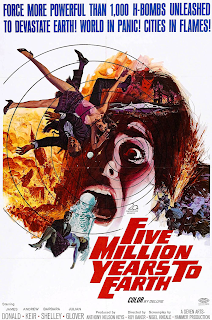
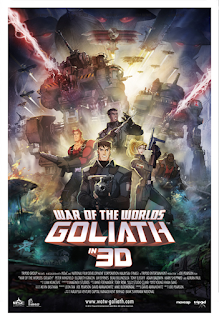
Five Perfect Mars Films


Both in my book and on this blog, there a great many Mars movies. In my view, though, only the five shown here are perfect.  Note that three are variations of H.G. Wells' paradigm-changing THE WAR OF THE WORLDS. 

To read more about each of these five films click on the photos.


https://redplanetonfilm.blogspot.com/2017/07/five-million-years-to-earth-quatermass.html

https://redplanetonfilm.blogspot.com/2018/06/the-war-of-worlds-1953.html


https://redplanetonfilm.blogspot.com/2018/04/war-of-worlds-goliath-2012.html

https://redplanetonfilm.blogspot.com/2017/05/the-great-martian-war-19131917-2013.html


Formal Notice: All images, quotations, and video/audio clips used in this blog and in its individual posts are used either with permissions from the copyright holders or through exercise of the doctrine of Fair Use as described in U.S. copyright law, or are in the public domain. If any true copyright holder (whether person[s] or organization) wishes an image or quotation or clip to be removed from this blog and/or its individual posts, please send a note with a clear request and explanation to eely84232@mypacks.net and your request will be gladly complied with as quickly as practical.